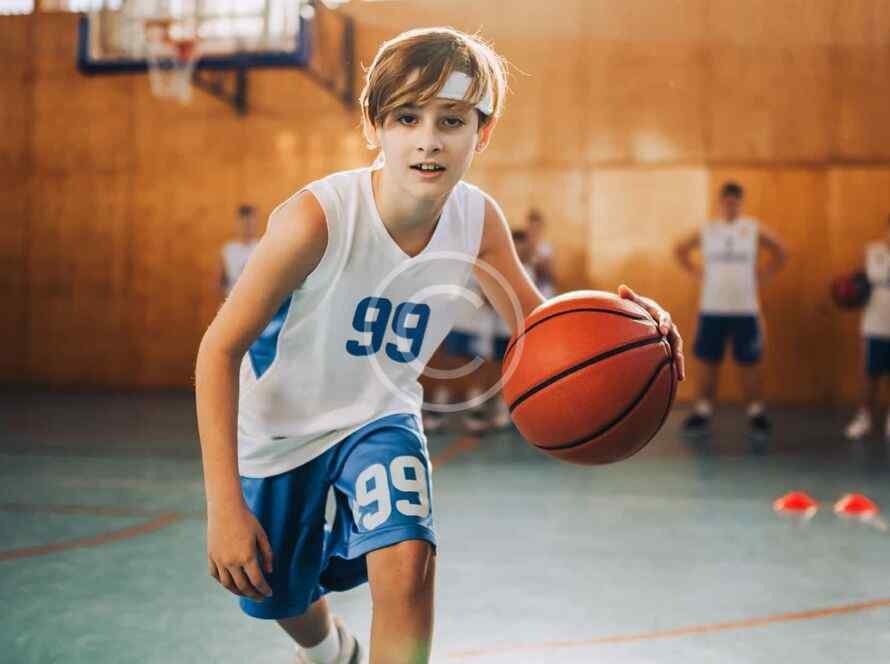

How to build confidence in young basketball players starts way before they ever touch a ball. Most coaches and parents focus on skills — dribbling, shooting, footwork. But research shows that a player’s mindset determines their ceiling, not their talent. A study by Harwood and Knight, published in Psychology of Sport and Exercise, found that mental factors — including self-confidence — were stronger predictors of youth athletic performance than physical skill alone.
As a general rule, there are three keys to building confidence in young players — positive reinforcement, repetition, and a coach or parent who believes in them.
If you want the full playbook on how to do this as a parent, check out our book ‘How to Be an “Elite” Parent for Young Basketball Players’ — it goes deep on all three.

Think about the best coach you ever had. Chances are, they didn’t just teach you skills — they made you believe in yourself. That belief is what separates good players from great ones. And the good news? Any parent or coach can learn how to build it. In this article, we’re going to show you exactly how.
Why Confidence Is the Real Game-Changer in Youth Basketball
Ask any elite coach what separates good players from great ones. The answer is rarely height, speed, or shooting form. It’s confidence. A skilled player without confidence is like a sports car with the handbrake on. All the power in the world, going nowhere. In youth basketball, mindset drives everything.

Players who believe in themselves take the shot. They step up when it matters. Without that belief, even the most talented kids play small. And playing small can become a habit that’s hard to break. The good news? Confidence isn’t something kids either have or don’t have. It’s built — rep by rep, game by game, conversation by conversation.
Research confirms that young athletes who receive consistent encouragement develop stronger self-belief over time. When coaches and parents understand how to create those moments deliberately, everything changes.
What Low Confidence Actually Looks Like on the Court
Low confidence doesn’t always look like a kid crying on the bench. Sometimes it’s quieter. The player who never calls for the ball, even when wide open. The kid who hesitates too long before shooting. The one who hangs back during fast breaks, waiting for someone else to lead.
Sports psychologists call this avoidance behaviour — playing not to mess up instead of playing to win. Body language tells the story too. Slumped shoulders. Eyes on the floor. Avoiding the coach’s gaze. These aren’t lazy habits. They’re confidence gaps in disguise — and they compound fast if left unaddressed.
Why Some Kids Struggle More Than Others
Not every child lacks confidence for the same reason. Some struggle because mistakes at home are criticised, not coached. Others feel behind because they’re physically developing later than teammates — even when their skill level is equal. Introverted kids internalise failure more deeply.
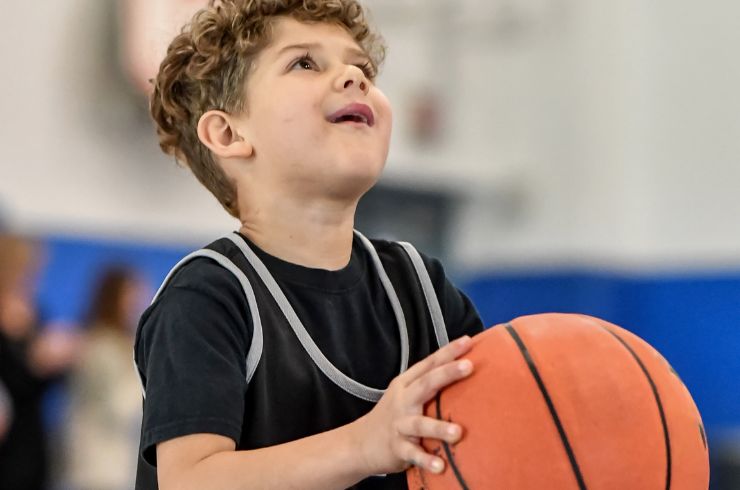
One harsh comment can echo for weeks. Research published in the Journal of Applied Sport Psychology found that parental pressure — including unrealistically high expectations — significantly increases trait anxiety levels in young athletes. Anxiety and confidence cannot coexist. And some kids simply haven’t been taught how to be confident. Confidence is a learnable skill — like dribbling. But someone has to teach it.
What Kills Confidence in Young Players (And What to Avoid)
Before you can build confidence, you need to stop tearing it down. That sounds obvious. But most confidence damage in youth basketball happens accidentally. Well-meaning coaches and parents simply don’t know better. Think of a young player’s confidence like a sandcastle.
It takes time and patience to build. One wrong wave can flatten it in seconds. Understanding what causes that wave matters just as much as knowing how to build. According to Youth Sports Psychology, kids in confidence-killing environments are more likely to quit their sport entirely. That’s not just a bad game. That’s a lost love for basketball — possibly forever. So before we talk about what to do, let’s talk about what to stop doing first.
The 6 Biggest Confidence Killers in Youth Sports
Sports psychologists have identified six core confidence killers in young athletes. Recognising them is the first step to eliminating them.
1. Self-doubt — the internal voice whispering “you’re not good enough” before tip-off.
2. Fear of failure — kids who fear mistakes stop taking risks. No risks means no growth.
3. Unrealistic expectations — when the bar is impossibly high, failure feels guaranteed. According to Success Starts Within, this is a leading source of frustration in young athletes.
4. Negative self-talk — “I always miss these.” Words become beliefs fast.
5. Perfectionism — chasing perfection guarantees disappointment. Progress is the real goal.
6. Seeking social approval — when confidence depends on others’ opinions, one critical comment unravels weeks of progress.
These six killers rarely arrive alone. They feed off each other.
How Parents and Coaches Accidentally Make It Worse
Nobody sets out to damage a child’s confidence. But it happens every weekend on courts everywhere.
The most common mistake is the post-game debrief. A child walks off the court. Heart pounding, emotions raw. Before they’ve had water, an adult launches into “Why didn’t you drive left?” That moment causes more damage than the loss itself.
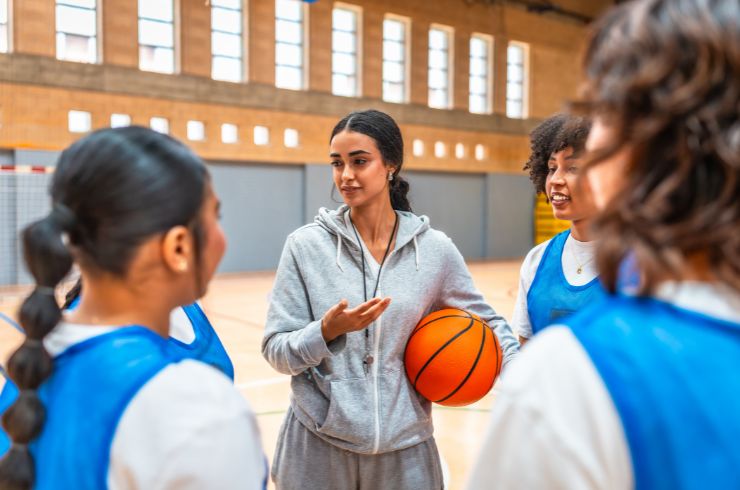
A meta-analysis on parental involvement in youth sport found that parental pressure significantly increases anxiety in young athletes — while also reducing their enjoyment of the game. Anxiety is the silent assassin of confidence.
Coaches fall into traps too. Publicly correcting a player mid-game shrinks them instantly. They don’t hear the correction. They feel the embarrassment.
Then there’s comparison. “Your brother never had this problem.” Comparison doesn’t motivate kids — it shames them. And shame shuts performance down completely.
9 Proven Ways on How to Build Confidence in Young Basketball Players
Here’s where it gets practical. Everything above was the why. This is the how. Building confidence in young basketball players isn’t about one magic drill or one perfect pep talk. It’s a system. A daily commitment from every adult in that child’s basketball life.
The strategies below are drawn from sports psychology research, real coaching experience, and the hard-won lessons of parents who’ve sat in the stands watching their kid struggle — and then flourish. Some will feel natural immediately. Others might challenge the way you’ve always done things. Either way, they work.
1. Create a Safe and Supportive Environment
Confidence cannot grow in a climate of fear. Full stop. When young players feel safe to make mistakes — without being benched, berated, or embarrassed — they take more risks. More risks means more growth. It really is that simple.
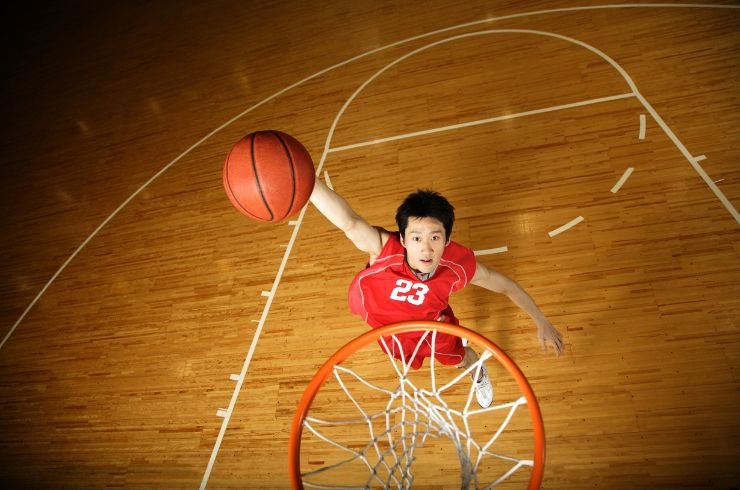
Creating a safe environment starts with the tone coaches set on day one. According to Breakthrough Basketball, players gain confidence when expectations are clear and the culture feels predictable. Post three to five core values in the gym. Effort. Attitude. Teamwork. Refer to them constantly.
For parents, safety means home is a no-judgement zone after games. Win or lose, your child should feel secure coming to you. That security becomes the foundation everything else is built on.
2. Focus on Effort and Improvement — Not Results
Scoreboard culture is one of the sneakiest confidence killers in youth sports. When every conversation after a game starts with “Did you win?” — kids learn that results are what matter. So when results are bad, they feel bad. About themselves. Not just the game.
Shifting focus to effort and improvement rewires that thinking entirely. Praise the hustle. Celebrate the extra defensive stop. Acknowledge the courage it took to attempt that left-hand layup.
Research highlighted by Psychology Today confirms that recognising effort over outcomes helps young athletes feel more competent — which directly improves their confidence and performance over time.
The question after every game shouldn’t be “Did you win?” It should be “Did you give everything you had?”
3. Set Process Goals, Not Just Outcome Goals
“Make the starting lineup.” “Average ten points a game.” These are outcome goals. And for young players, they’re dangerous.
Outcome goals depend on factors outside a child’s control — the coach’s decisions, the opponent’s skill level, the teammate who also wants that starting spot. When kids chase outcomes they can’t fully control, frustration follows. Confidence drops.
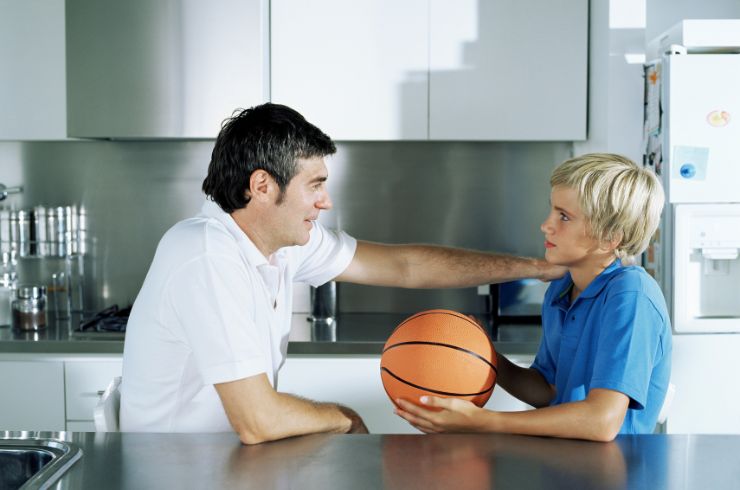
Process goals are different. “I’ll take fifty free throws after every practice.” “I’ll call for the ball at least three times per game.” These are achievable. Measurable. Entirely within the player’s control.
According to Success Starts Within, unrealistic outcome expectations are a primary driver of confidence crashes in youth athletes. Process goals are the antidote. They keep kids winning — even on losing days.
4. Build Skills Through Repetition and Small Wins
Confidence isn’t given. It’s earned — one made shot, one completed pass, one successful defensive stop at a time.
The science behind this is straightforward. Repetition builds muscle memory. Muscle memory builds competence. Competence builds confidence. Skip any step and the whole chain breaks.
The key is designing practice so that small wins happen constantly. Not participation trophies. Real, earned moments of success. A drill where a player masters one move before progressing to the next. A shooting challenge where the target is realistic — not demoralising.
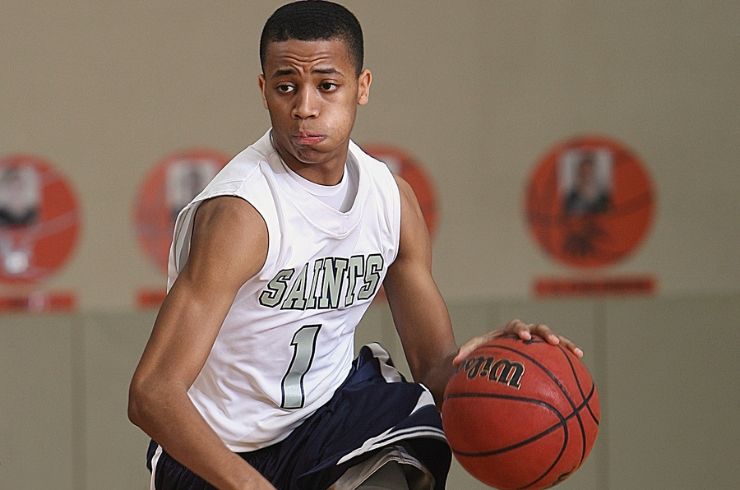
Burlington Basketball’s approach captures it well — track specific improvements so players can see their own progress. “You’re making that pass seven out of ten times now, up from four.” That’s not just coaching. That’s confidence being built in real time.
5. Teach Positive Self-Talk and Self-Compassion
The loudest voice a player hears on the court isn’t the coach. It isn’t the crowd. It’s their own inner voice.
And for many young athletes, that voice is brutal. “I always choke.” “I’m the worst one out here.” “Everyone’s watching me mess up.” Left unchecked, that internal dialogue becomes a self-fulfilling prophecy.
Teaching positive self-talk means giving players replacement phrases. Instead of “I always miss these” — “I’ve made this shot before. I can make it again.” Practice these phrases during drills, not just games.
Self-compassion goes hand in hand. Players need to understand that even NBA professionals miss half their shots. Mistakes aren’t character flaws. They’re part of the game, for everyone, at every level.
6. Make Practice Fun and Pressure-Appropriate
Here’s a coaching truth nobody puts on a clipboard: kids who are having fun learn faster.
When players are laughing, competing, and genuinely enjoying practice — their guard comes down. Insecurity takes a back seat. The skills they’ve been drilling start flowing naturally. Fun isn’t the opposite of hard work. It’s the environment that makes hard work sustainable.
Alongside fun, pressure needs to be introduced gradually. Start with low-stakes competitive drills. Then slowly raise the stakes — losers run, winners pick the next drill. Eventually simulate real game pressure: “Down two, thirty seconds left. Go.”
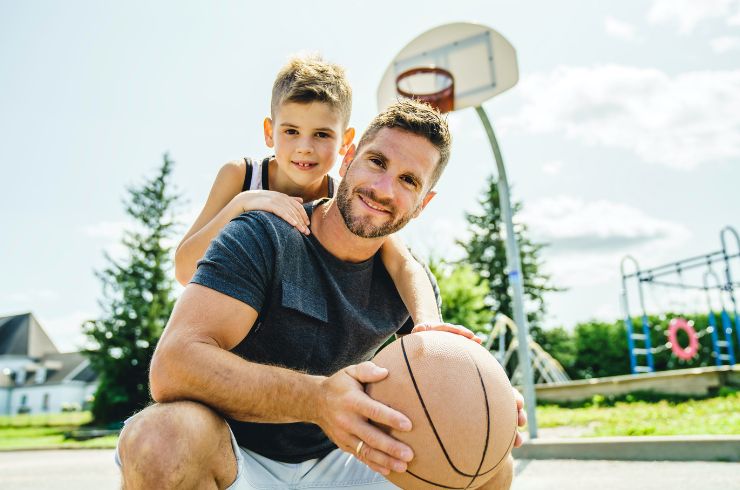
The goal is to make pressure feel familiar. Because confidence under pressure isn’t a personality trait. It’s a skill and like every skill, it needs to be practised deliberately and consistently.
7. Keep Communication Open — On and Off the Court
A player who can’t tell their coach they’re struggling is a player who suffers alone. Open communication is the glue that holds every other confidence-building strategy together. Coaches should create regular moments for one-on-one check-ins. Not just about basketball. About how the player is feeling. A simple “How are you doing this week?” can open doors that change everything.
For parents, open communication means asking better questions. Not “Why did you miss that shot?” but “How did you feel out there tonight?” Open-ended questions invite honesty. Closed questions invite defensiveness.
Research from Burlington Basketball highlights this well — athletes who feel comfortable expressing self-doubt with their coaches and parents work through those feelings faster. Silence, on the other hand, lets self-doubt fester into something much harder to fix.
8. Teach Players How to Bounce Back From Mistakes
Every player misses shots. Every player has bad games. The difference between confident players and fragile ones isn’t the mistake — it’s the recovery.
Confident players have a reset routine. A deep breath. A shake of the hands. A simple phrase like “next play” that acts as a mental reset button. These aren’t just habits. They’re psychological tools that prevent one mistake from spiralling into ten.
Coaches can teach this deliberately. Acknowledge the mistake briefly. Identify one correction. Then move forward, immediately. Don’t dwell. Don’t replay.
As Derek Jeter once said — “Every time you go up, you have to have a good feeling.” That mindset doesn’t happen by accident. It’s taught, practised, and reinforced, until bouncing back becomes second nature.
The Role of Parents in Building a Confident Young Player
Parents are the most underrated confidence coaches in youth basketball. More than any drill, any training programme, or any coach’s pep talk — you are the constant. You’re there before the season starts and long after it ends. You see your child on their best days and their worst.
That proximity is either your greatest asset or your biggest liability depending on how you use it. The research is unambiguous on this. Parental involvement done right is one of the strongest predictors of confidence in young athletes. Done wrong, it’s one of the fastest ways to erode it. The difference between the two often comes down to awareness. Knowing what to say, when to say it, and, just as importantly, when to say absolutely nothing at all.
We cover the parent’s role in full detail in our book — including the exact language to use at every stage of your child’s basketball journey.
What to Say After a Bad Game
The car ride home after a loss is one of the most defining moments in a young athlete’s life. Most parents don’t realise this. They treat it like a debrief. The child treats it like a courtroom.

Keep it simple. Lead with empathy. “I loved watching you play tonight.” Full stop. Let that land before anything else is said. If your child wants to talk about what went wrong, they will. Follow their lead, don’t set the agenda.
Avoid the instinct to fix, analyse, or motivate. Right after a hard game, the emotional brain is in charge. Coaching language doesn’t land. Comfort does. Save the tactical conversations for when the dust has settled, usually the next day.
The Car Ride Home Rule Every Parent Should Know
The rule is simple. For the first twenty minutes after a game, you say nothing about basketball. Nothing critical. Nothing instructional. Nothing even well-intentioned.
Why twenty minutes? Because that’s roughly how long it takes for a child’s emotional state to regulate after competition. Jumping in before that window closes means your words land on raw nerves, not open ears.
What can you talk about? Anything else. Music. Food. What film they want to watch tonight. The goal is simple. Your child should associate the car ride home with relief, not dread. That association, built over a season, quietly builds confidence in ways no drill ever could.
Want more game-changing insights like this? They’re all inside “How to Be an ‘Elite’ Parent for Young Basketball Players”.
The Role of Coaches in Building Lasting Confidence
If parents are the foundation, coaches are the architects. A great coach doesn’t just develop skills, they develop people. And in youth basketball, the two are inseparable. The way a coach speaks to a ten-year-old after a missed layup can echo in that child’s mind for years.
That’s not an exaggeration. That’s the reality of working with developing brains at a critical stage of self-identity. According to Breakthrough Basketball, a confidence-building coach makes players more likely to stay in the sport.
A confidence-killing coach makes them more likely to quit. The margin between those two outcomes is often just the tone of one sentence. Coaches carry enormous power. The great ones know it, and they use it deliberately, carefully, and consistently from the very first whistle to the last.
How to Give Feedback That Builds — Not Breaks
Feedback is the most powerful tool a coach carries. Used well, it builds belief. Used carelessly, it destroys it.
The golden rule is simple — separate the person from the performance. “That shot wasn’t your best” lands very differently from “You’re a bad shooter.” One critiques a moment. The other attacks an identity. Young players can’t always tell the difference, so coaches need to choose words carefully every single time.
Be specific with praise. “Your footwork on that closeout was textbook” means more than a generic “good job.” Specificity tells the player exactly what to repeat. That clarity builds competence. And competence, as we’ve established, builds confidence.
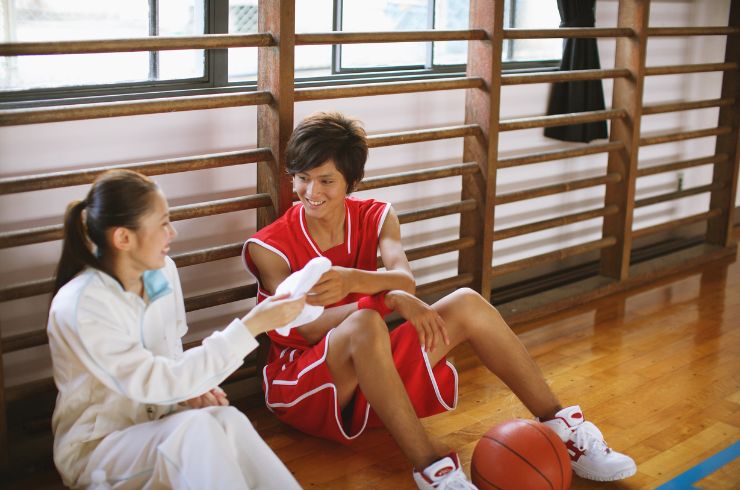
Correct privately. Praise publicly. That one principle alone can transform a team’s confidence culture faster than any drill ever will.
How to Set Clear Expectations From Day One
Uncertainty is a confidence killer. Kids who don’t know what’s expected of them spend mental energy worrying. Energy that should be going toward playing.
Great coaches eliminate that uncertainty immediately. From the very first practice, they establish clear, simple standards. Three to five core values the whole team can remember. Effort. Attitude. Teamwork. Respect. Post them on the wall. Refer to them constantly. Make them the language of the programme.
Breakthrough Basketball describes this perfectly — “Clarity is the new confidence.” When players know exactly what’s expected, they stop worrying about the uncontrollable. They focus on what they can do. That focus is where confidence takes root and grows into something lasting.
Confidence Off the Court Builds Confidence On It
Basketball confidence doesn’t only get built between the lines. What happens away from the court matters just as much, sometimes more. A child who feels physically strong, socially connected, and emotionally supported carries that energy onto the court. It shows in how they carry themselves during warm-ups.
It shows in how they respond to adversity mid-game. Think of off-court confidence as the soil. On-court skills are the plant. You can water the plant all you like. But if the soil is poor, growth will always be limited. The most complete player development programs understand this. They invest in the whole child, not just the basketball player. Because the two, it turns out, are impossible to separate.
How Physical Fitness Supports a Positive Self-Image
When kids feel physically capable: stronger, faster, more coordinated, their self-image improves. That improvement translates directly onto the court. They move with more authority. They compete with more conviction.
Research from the American Academy of Pediatrics confirms that regular physical activity significantly improves self-esteem in young athletes. Simple things make the biggest difference: consistent sleep, good nutrition, and conditioning work that isn’t used as punishment. When a young player feels good physically, they almost always perform better mentally.
Why Team Bonding Activities Matter More Than You Think
Skill development gets all the attention. Team bonding rarely does. That’s a mistake. When players genuinely like and trust each other, everything changes. They communicate more freely. They take risks knowing teammates have their back.
They bounce back from mistakes faster. Burlington Basketball builds team bonding deliberately. Bowling nights, team picnics, group challenges. These aren’t fun extras. They’re confidence infrastructure. A player who feels like they truly belong plays with a freedom that no amount of individual training can replicate.
Frequently Asked Questions
Still have questions? You’re not alone. These are the ones we hear most often from parents and coaches at BizzyBallin — and they’re worth answering properly.
How long does it take to build confidence in a young athlete?
There’s no fixed timeline. Every child is different. That said, research from Self-Determination Theory, developed by psychologists Deci and Ryan, found that consistent positive reinforcement significantly improves intrinsic motivation and self-belief in young athletes over time. The key word is consistent. Sporadic encouragement doesn’t move the needle. Daily, intentional support does.
For a full guide on how to do this at every stage, our book walks parents through it step by step.
What age should you start building confidence in basketball players?
As early as possible. Research suggests that self-belief patterns form as young as five or six years old. The earlier positive habits are introduced, i.e. effort-focused praise, safe environments, process goals — the stronger the foundation. Waiting until a player is struggling is always harder than building confidence from the start.
Can a shy child become a confident basketball player?
Absolutely! And basketball is actually one of the best environments for it. Shy children often thrive when given structure, clear expectations, and a team culture where they feel safe. Confidence for introverted kids builds slower but runs deeper. Patience and consistency from coaches and parents make all the difference.
What is the best drill to build confidence in youth basketball?
Any drill where success is achievable but earned. The sweet spot is roughly an 80–85% success rate — challenging enough to feel real, achievable enough to feel good. Shooting progressions, one-on-one finishing drills, and ball-handling challenges that advance level by level are particularly effective confidence builders for young player.
Final Thoughts
Building confidence in young basketball players isn’t a one-time conversation or a single training session. It’s a culture, created deliberately, day after day, by every coach and parent in that child’s corner. The most talented player in the world won’t reach their potential without belief in themselves.
And that belief doesn’t arrive on its own. It’s built through safe environments, honest feedback, process goals, team belonging, and the quiet power of a parent who knows when to speak and when to simply say “I loved watching you play tonight.” Start there. Everything else follows.
If you’re ready to go deeper, “How to Be an ‘Elite’ Parent for Young Basketball Players” is your next read — written for exactly the parent described in this article.